
October 27, 2015
Great cultures ,Popular Articles
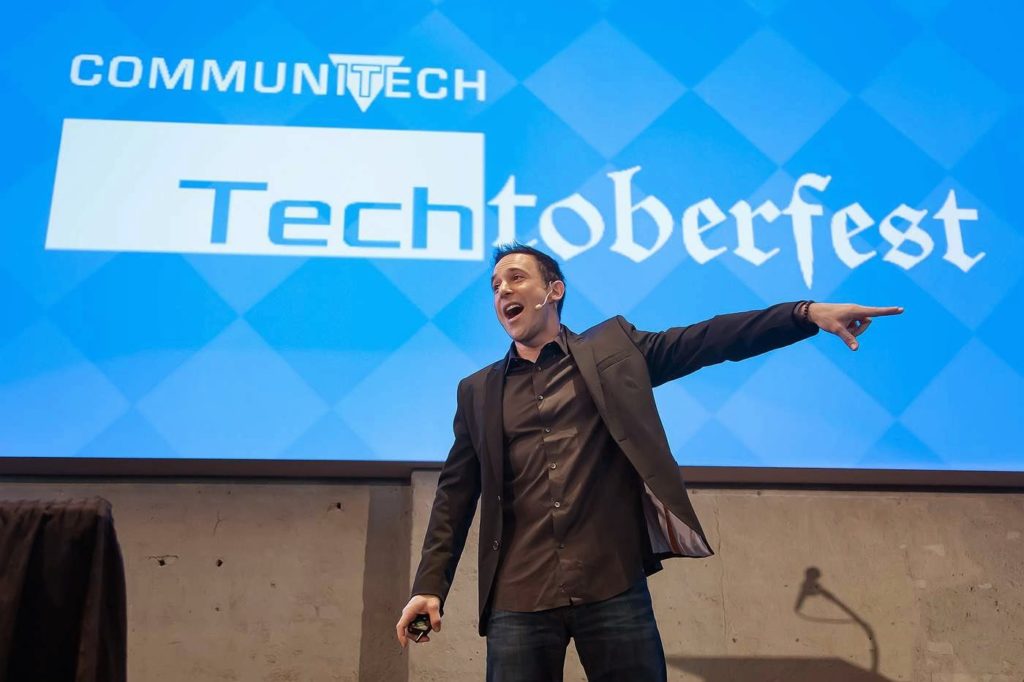
It’s the wild wild west when it comes to speaker prices. It can range from free up to over $250,000. So how do you know what’s the right cost?
I’ve been speaking for years, and I use a mix of speaking, workshops, consulting and products. I’ve done everything from a free hour to help out a friend to charging $45,000 for a comprehensive full-day presentation, workshop and follow-up support.
$150,000 +
This is the Bill Clinton level. It’s like getting the chance to see Elvis while he’s still alive. I heard he once walked in late, not even knowing the audience and he still had everyone eating out of the palm of his hand… While this rate sounds a bit ludicrous, I spoke to an organization who hired him and they said it was cost effective because of how much money they raised through the Gala he attended.
$75,000 – $140,000
This is the Seth Godin level – very famous and strong speakers. I saw Seth speak in Las Vegas and he takes the audience through his entire journey of thinking across his books, so it’s like getting a massive education in marketing (and he makes it very funny). You can use my guide at the end of the article to figure out if it’s worth it, but either way, at this level you’ll get a very engaging experience.
$35,000 – $70,000
I would call this the risky zone. At this rate you’re getting famous authors, former business leaders or even current CEO’s of great companies. They can charge this much because that’s what their time is worth to them and they have strong brand names associated with them. Whether or not they’re a great speaker is where you roll the dice. I would make sure to watch many of their videos and ask for a reference. Don’t assume they’re great just because they’re expensive.
$20,000 – $30,000
I consider this the sweet spot. The speakers at this level are not necessarily a brand names themselves. Instead they serve the best brands in the world (make sure to look at their client list and past speaking engagements). Also, speakers at this level speak often enough to master the craft but still build in time to develop new content and stay up to date on the field.
$5,000 – $10,000
This is the bargain zone. And like any bargain you could either be totally thrilled or end up wishing you had spent a little more to get a way better result. This is the rate you’ll see for newer speakers or speakers who live on the road and do a very high volume of speeches every year. Sometimes you can get a high-end speaker at this rate if they happen to be in your city and can easily drop by.
Free
There are many scenarios where a speech can be free, some great and others highly cautionary. When I managed a company at Zappos there were great speakers who offered to speak for free to simply participate in the Zappos culture and and be part of the culture wave. Of course it’s rare to have such a strong brand, but you can still offer an experience that could be tempting. Early in my career I spoke for free in Malaysia because the company took me on their team vacation and also gave me access to a mastermind of successful entrepreneurs.
I would be wary of speakers who want to speak for free because they are selling something at the end. Again, some of these speakers can be great, but others have objectives other than serving the specific needs of your organization or audience.
1. What is the actual value?
In other words, if this speaker actually made your problem go away, or generated X dollars in additional revenue, or aligned all of your people… how much is that worth to you?
2. What’s the per head cost?
What’s great about a speech is you get to educate and inspire an entire audience at one time. So if you have a a company of 5000 people and you hire a $50,000 speaker, you’re only paying $10 per person for their education and growth. Also, consider a full cost accounting of your event. What is the real ROI on the food, or a fancy hotel conference room vs. a highly impactful experience?
3. What is the entire experience?
There’s a big difference between sitting and hearing lecture for an hour and having an experience that forever changes their world. There opportunities to get interactive and dive in. I’ve found that the most powerful experiences combine content, interaction and team-building. Ask your speaker what kind of experience they can create for your audience and what the result will be.
October 14, 2015
Hacks ,Productivity
When I was 60K in debt from a failed business, depressed and low on hope I invested my time in something that made no financial sense…
I became a spinning instructor.
I had always wanted to be one since high school. I loved the combination of DJ, coach and speaker. So much time was spent on training and making mixes that I lost money. And yet, I had so much fun that I was able to use all of the energy to launch my next career. Again, it did not make sense from a practical perspective, but I followed the energy.
For me, it’s often a distinction between what looks good versus what feels good…
It’s a date who looks amazing, but I don’t feel myself around her. It’s a house I’m looking at that has all the amenities, but doesn’t feel like home. It’s a speech that delivers on paper, but I don’t care about it.
It takes courage to follow the energy, but more importantly it takes curiosity and a sense of wonder.
All of this applies to culture as well, since culture is simply a bunch of people together. If the group is following what “should” matter (results, revenue, profit, new manager program du jour), and not what they’re passionate about (the customer, the values, the product, or even each other), then the culture eventually goes south.
Veteran pilots still use checklists. Yoyo Ma still plays scales. And the best athletes practice for hours.
I’m always amazed by how much it’s the basics that make the difference.
On the personal level it’s really about getting great food, sleep, exercise and meditation. I heard that neurosis is the result of denying our animal nature, and I can tell you if I don’t get exercise I anxious and neurotic. In fact, if I do boxing or martial arts I’m so peaceful I don’t even have thoughts in my head afterward.
On the corporate level it’s about meetings. Most companies are terrible at meetings. They’ll take on multi-million dollar change initiatives and yet everyday meetings are dysfunctional.
When I work with teams I start with the basics: Can you be on time? If you show up late and run over then you’re prioritizing your own personal agendas over the culture. But if you’re on time, you’re honoring commitments. There’s no point working on values if you can’t even be on time.
Flow is “the mental state of operation in which a person performing an activity is fully immersed in a feeling of energized focus, full involvement, and enjoyment in the process of the activity. In essence, flow is characterized by complete absorption in what one does.” (1) It’s when athletes are “in the zone.”
I have a million things on my to do list, and trying to multi-task is a joke. It just adds stress. I continue to learn that lesson. But focus is heaven. It feels like a luxury.
Getting totally absorbed with a task (even if it’s one I don’t like) is a pure joy. A friend of mine who survived drug addiction started his life again by cleaning chandeliers. He said it was one of the most joyful times of his life because it was so simple.
Looking back on this list I see the lessons could also be re-written as temptations:
1. Follow the Energy
(Temptation: Choosing what “should” be done, or what looks good instead of what feels good)
2. Get back to the Basics
(Temptation: Going for the new shiny object)
3. Focus is Flow
(Temptation: Multi-tasking, letting texts, emails and facebook interrupt me)
September 27, 2015
Great cultures ,Popular Articles ,Productivity ,Values

There’s one word I keep hearing at companies when they express their desires. It’s like the holy grail people are seeking. What people want most, whether leaders or workers, is this:
And what’s interesting is I see this most in companies that are successful! Successful companies have a plethora of opportunities, choices and options. And so the pain comes from questions such as:
The funny thing is that focusing on these questions only makes the problem worse, because it actually brings up even more options.
I was running a culture game around conflict and it was interesting how challenging it was for people to follow a basic language protocol that focused their communication. It was like they were wrapping their brains around how to be more specific and concise when they were used to simply talking and figuring things out as conversation went on.
This was in stark contrast to a podcast I heard with a 24 year old Army Ranger whose clarity in communication was incredible. He could think so clearly and communicate with quick precision, without meandering thought. I immediately thought: This is the kind of person I’d like to hire.
So there are two ways to solve this dilemma of clarity. First, as I’ve always said, the biggest impact you can have on your culture is who you let into the organization.
It’s always tempting to go with the person who has the exact experience we need on their résumé. But that’s a terrible idea. Unless it is ultra specific (think: nuclear chemist), then hiring someone who has already “been there, done that” means they won’t grow a lot and so they won’t give their best.
Whereas if you hire someone who:
a) loves to learn (and learns fast)
b) thinks clearly (more on that in a moment)
c) communicates clearly (succinctly, on point, and looks you in the eye)
Then you’ll have someone you want for life.
The reason an Army Ranger can think so clearly is because their lives are built around the 3 P’s:
Whether it’s the core values of Whole Foods, or the credo of the Navy Seals, the strongest organizations run on principles. Principle define who’s in and who is out. They act as guides for decision making and they reduce politics by aligning people to agreed upon concepts rather than to people in power. If you haven’t figured out your principles, check out the core values process in my book The Culture Blueprint.
There’s an anecdote from the Checklist Manifesto that says a beginner pilot uses a checklist to prepare for a flight. Do you know what a veteran pilot with 30 years experience on a 747 uses? The same thing: A checklist. If it’s clear that we must do it and hold to a standard of excellence, then a protocol like a checklist is very useful. And this is not just for processes, but also for conversations. That’s why I have a protocol that I teach for conflict resolution. By staying within the process it allows people to feel safe. New management systems such as Holacracy are based on this concept. If companies had a protocol for delegating it would relieve so much pain.
Policies can actually be quite liberating when used effectively. For example, a policy can be that any employee can use up to $500 to remedy a customer service error without asking for approval. That policy can empower people to make decisions while still keeping a safeguard on the process.
If you feel overwhelmed by all the decisions you need to make, consider if there’s a breakdown in clarity and how precise communication, principles, protocols and policies can help.
September 4, 2015
Great cultures

I heard a story about Yo-Yo Ma, the world class cellist, thrilled talking with another musician when he realized they both still practice scales to this day.
There’s something about “Level 1” that’s so important and underrated.
I run into it all the time in culture work. A a company wants a big payoff, win, revenue (insert any goal) and they look to the latest tool or technique. But I almost always find the answer is in going back to a core value or principle that guides a team’s success. That’s level 1.
We are always at Level 1.


 Text Robert