
May 11, 2026
Uncategorized
Microsoft just spent millions proving the bottleneck is culture. Here’s what to do about it.
Microsoft’s 2026 Work Trend Index dropped this week with a finding that should make every AI vendor uncomfortable:
The biggest barrier to getting value from AI isn’t the technology. It’s not the workers. It’s the organizational culture around them.
They call it the “Transformation Paradox.”
Sixty-five percent of AI users fear falling behind if they don’t adopt fast. But forty-five percent say it feels safer to just focus on current goals. And only thirteen percent say their company rewards reinvention with AI — even when it works.
Every culture is a game.
Not metaphorically.
Structurally.
A game has four properties:
Now run your company’s AI adoption through that filter.
What is it?
“Use AI more” isn’t a goal.
“Become AI-native” isn’t a goal.
Those are vibes.
A real goal looks like this:
Reduce time-to-first-draft on client proposals from three days to three hours.
That’s a game worth playing.
Do your people know what’s allowed?
Can they experiment with customer data?
Can they use AI to draft external communications?
Can they build their own workflows?
In most companies, the answer is some version of:
We’re still figuring that out.
Which means the rules are vague.
And vague rules produce the same result every time: people default to what’s safe and familiar.
How does anyone know if their AI experiment worked?
Microsoft found that only thirteen percent of workers are rewarded for reinvention. That means eighty-seven percent are playing a game with no scoreboard.
Imagine a basketball game with no score display.
You’d stop playing hard pretty fast.
Are people choosing to engage with AI, or are they being told to?
There’s a massive difference.
Mandated adoption creates compliance.
Voluntary adoption — fueled by genuine curiosity and a visible upside — creates momentum.
Microsoft’s data shows that the highest-performing AI users, the “Frontier Professionals,” aren’t just skilled. They’re in environments where they chose to experiment and were supported when they did.
Before you buy another platform, design a better game.
August 29, 2025
Uncategorized
You must try out his amazing social / party game: Casting Call the Game.
October 14, 2024
Uncategorized
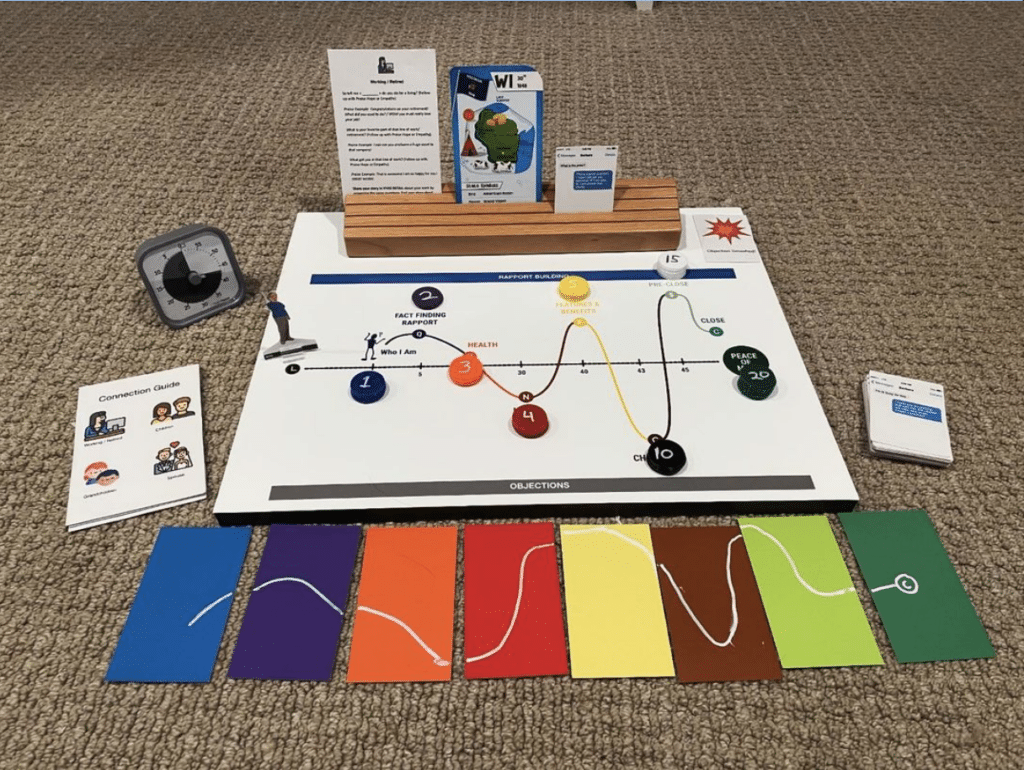
I learned a lot about how to create WOW experiences during my tenure at Zappos. And now I’m applying them to the sales experience (specifically for outbound sales calls with a complex sale).
I’ve developed this sales game (below) that can be used in:
a) Training / Role play
b) On live calls
c) During coaching / mentoring
The game dynamics work so that:
1. The win isn’t just closing the sale. You get a point score at the end of it to track progress over time.
2. The player can see what stage of the process they get stuck on (when they collect the coins at the end of the day), so they know how to ask for coaching help.
3. You see you’re in the sales flow vs when you’re in pure rapport building or objections smashing.
4. You learn how to rapidly smash objections through the additional card game
5. It takes what can be a long and boring sales script and turns it into a fun and engaging game.
Have you thought about creating a game out of your process.
I’d love to help you. Let’s talk (click here)
April 22, 2024
Uncategorized
Here’s my opener for Zendesk…
March 29, 2024
Uncategorized
Everyone knows about the “Trust Fall” – The old hackneyed team-building exercise. And then there’s the rope courses that simulate the feeling like you could lose your life if you don’t depend on your teammates. But as my mentor said, “It all goes out the window when you get back to the office.”
Here are a few tips to building stronger teams that actually work:
1. Shared Adversity
We actually tend to bond more when we’re struggling through something together. But the challenge is making it work-related. Here is a team-building example from the founder of Pictionary. Even if it’s being together through drudgery, that’s where some of the best (and funniest) conversations can happen.
2. Get in Movement
There’s a reason the armed forces march in synchronization, for hours. My team and I used to go for hikes together. My current client is now doing group walks around the office building. We all could use a reason to get out of our chairs, and plus – the best ideas come when we’re away from our computers.
3. Shadowing
There’s no better way for team members to both understand and appreciate what others do than having them sit down for at least an hour and watch someone work. This can also be used to help team members understand people’s roles outside of their own departments. Organizational empathy goes a long way to building company culture.
As always, don’t believe me.
Just try it and see what happens.
December 22, 2023
Uncategorized
These days everything seems to be political. As we create open and safe workplaces, where does the discussion of politics come in? Short answer? It doesn’t.
There’s been a disturbing trend where employers are constantly trying to please employees. This is not great leadership. To use an analogy, is spoiling your children the best parenting?
The truth is the company exists to do a job, and to serve a customer. And by all means that means taking care of workers needs. But political discussion is not one of them.
If you’re worried that people will leave if you don’t create space for politics, then I have to assume the vision and culture are simply not strong enough to retain talent. And if that’s the case, let’s talk.


 Text Robert